
Program
The 1st Scientific Colloquium – Large Scale Testing: Linking Research and Industry will feature two days of scientific sessions, keynote lectures, and discussions focusing on the interaction between experimental research and industrial application in geotechnical engineering.
The program will include presentations from leading international experts as well as contributions from young researchers, covering recent advances in large-scale testing, numerical modelling, and innovative design concepts.
Keynotes
Carlos Ovalle (Ing., PhD, Associate Professor, Polytechnique Montréal, RIME Canada)
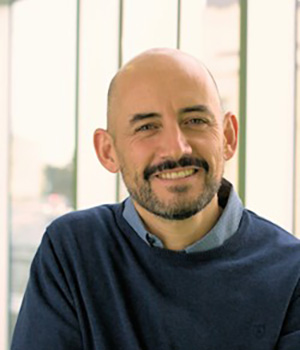
MICRO-TO-MACRO MECHANISMS BEHIND SIZE EFFECTS IN COARSE GRANULAR SOILS
The practice of reducing particle sizes to produce laboratory-scale specimens for coarse soils and rockfills continues to draw attention,
largely because its effectiveness remains uncertain. Over the years, numerous experimental methods have been proposed, and significant
data has been compiled. However, researchers have often reported conflicting experimental observations, leading to apparent contradictions
regarding size effects.
This lecture presents an integrated synthesis of the authors’ experimental and numerical investigations dedicated to clarifying how size affects the shear response of coarse granular materials. Based on comprehensive large-scale laboratory and in situ tests on rockfills and gravelly soils, and complemented by campaigns of numerical tests using the discrete element method (DEM), the effects of several material properties are systematically isolated and studied at both the soil element and the particle scales. The study includes analyses of intrinsic parameters (grading, particle shape, and particle crushing strength), sample and testing conditions (boundary effects, specimen size, representative element volume (REV)), and state parameters (stress and density).
Sandra Linero-Molina (PhD, MIEAust, CPEng, NER, RPEQ, MAGS)

TESTING THE UNTESTABLE? PRACTICAL LESSONS FROM LARGE-SCALE GEOTECHNICAL TESTING OF COARSE BLASTED MINE WASTE
Preliminary Program Overview
14. September & 15. September 2026
-
Opening session and welcome address
-
Keynote lectures by invited speakers
-
Technical sessions on large-scale testing
-
Panel discussion: Bridging the gap between research and practice
-
Poster session and networking breaks
-
Evening: Conference dinner / social event
-
Industry-focused presentations and case studies
-
Research-oriented topics
-
Closing remarks and outlook
Program Release
The detailed program including session chairs, presentation times, and poster schedules
will be published on 1 September 2026.
In order to use the time effectively, we will start at 8 a.m. on 14 September. This should be considered when planning your travel arrangements.